

Remote temperature monitoring systems

What it is, how it works, and how to choose a system
Understand what remote temperature monitoring is, how it works, and how to choose the right remote system for your needs.
Download an easy overview of what to look for in a remote monitoring system
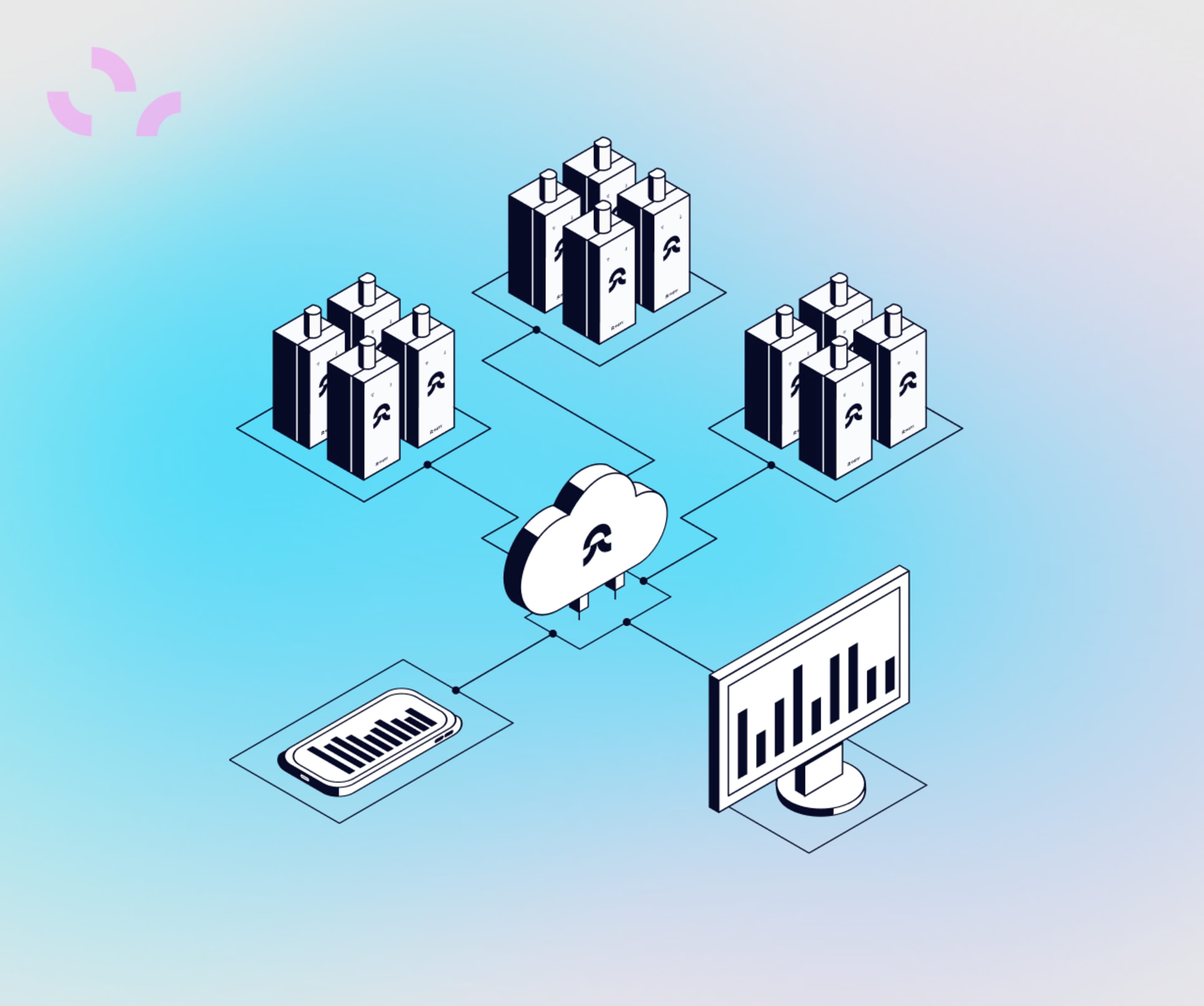
Table of contents
What is remote temperature monitoring?
Remote temperature monitoring means tracking environmental temperatures from a distance – without needing to be onsite or manually retrieve data. In regulated industries, this (often) involves using Wi‑Fi data loggers that continuously measure and transmit temperature readings to a cloud-based platform.
With this setup, teams can monitor real-time temperature conditions across units and facilities, access data from any screen, and respond to alerts immediately. The result is fewer errors, faster decisions, and less time spent digging through paper logs or spreadsheets.
Learn more about different temperature monitoring systems.
Why remote monitoring is relevant in pharma and healthcare logistics?
For pharmaceutical, biotech, and healthcare logistics companies, regulatory bodies require strict control of temperature-sensitive goods throughout production, storage, and distribution. Even small deviations can compromise the safety, efficacy, or compliance of products.
Remote monitoring helps teams meet these standards without stretching resources or taking on unnecessary risk. It enables faster response to temperature excursions, reduces the risk of human error by automating alerts and recordkeeping, and simplifies inspections with centralized digital documentation. Whether you are managing cold-chain distribution or storing vaccines in a temperature-controlled warehouse, remote access to monitoring data is no longer optional – it is essential.
How does remote temperature monitoring work?
At its core, remote monitoring combines smart sensors, connectivity, and cloud software into one streamlined process.
- Wireless data loggers are placed in temperature-controlled environments, where they continuously measure temperature and, optionally, humidity.
- That data is then transmitted to a secure cloud platform via Wi‑Fi or cellular networks.
- If connectivity is lost, reliable systems will log data internally until the connection is restored. Many systems retain 30 or more days of data locally, which is a key compliance feature that ensures uninterrupted records during outages.
- From there, users can often access real-time dashboards, historical records, and alarm notifications from devices such as phones and tablets.
Well-designed remote monitoring systems may also integrate:
- Calibration tracking
- Deviation logs
- Mapping data for full compliance visibility
And increasingly, remote monitoring platforms offer integration options with existing quality or enterprise systems – such as Laboratory Information Management Systems, Enterprise Resource Planning, or Quality Management Systems – enabling a more connected and efficient compliance ecosystem.
Instant overview of the 10 things to look for in a remote temperature monitoring system

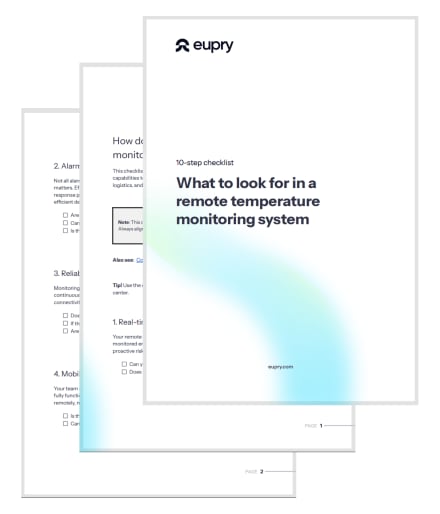
10-step checklist
What to look for in a remote temperature monitoring system
Get an easy overview of the most important features and compliance capabilities to evaluate in a remote monitoring system.
Regulatory impacts of remote temperature monitoring systems
For companies operating under Good Manufacturing Practice, Good Distribution Practice, or other GxP requirements, remote temperature monitoring can often have direct implications for regulatory compliance.
Some of the key areas to consider about your compliance:
- Does the system automatically log temperature data, user activity, and deviations?
- Can it store calibration records and generate audit trails?
- Is data available in a validated, inspection-ready format?
- Does it make it possible to easily comply with 21 CFR Part 11 requirements for electronic records and electronic signatures?
Modern systems make it easier to answer yes to these questions. They reduce manual effort, shorten audit preparation time, and increase overall confidence in compliance.
Also see: How Eupry-FMS integration works: Connect your monitoring system to your FMS or BMS
How to choose a remote temperature monitoring system
Having a reliable remote monitoring system lets you spot and handle deviations fast, reduce workloads, and lower risks to products. But not all remote monitoring solutions are designed for regulated environments.
So, how do you choose the best remote temperature monitoring system for your requirements and operations?
This section breaks down what to look for in a remote monitoring system built for GMP, GDP, and other GxP environments.
Also read: Temperature monitoring system: How to choose systems in GxP
Where should I start when choosing a remote monitoring system?
Starting your evaluation with a technical spec sheet might feel objective, but it misses the point. Most systems today can log temperatures. What matters is how well the system fits your compliance needs, existing workflows, and daily operations.
Before shortlisting vendors, ask:
- Who will use the system, and how?
- What type of deviations happen most often in your setup?
- Do you need mobile access for off-site teams or after-hours?
- What does your audit trail and documentation process look like?
Understanding your real-world use case helps you filter out nice-to-have features from must-haves.
When evaluating options, look for features that go beyond basic connectivity.
Among other things, a good system should provide:
- Real-time alerts with customizable escalation paths
- Offline logging for uninterrupted data capture
- Mobile access that works across all devices and users. Learn more about monitoring via cell phone.
- GxP-aligned functionality – audit trails, secure access, and validated processes
Ideally, the platform should also support related compliance processes such as calibration and mapping, consolidating tasks and reducing the need for multiple vendors.
6 questions you should ask vendors when comparing remote systems
- What happens if the Wi‑Fi fails? Can the system still log and later upload data? How long will it store readings offline?
- Who receives alarms, and when? Can you customize alarm paths based on severity, schedule, and recipient role?
- Can we access data during an audit – in three clicks or less? Many systems store data, but few make it truly accessible during inspections.
- How much setup and training does it take? What does deployment look like across multiple locations?
- Does it help us stay compliant – or just store data? Look for systems that actively support Good Manufacturing Practice workflows with validation, standard operating procedures, and built-in deviation tools.
- Can it grow with us? Does the vendor offer mapping, calibration, and full monitoring on one platform? Can the system scale across new sites or regions?
What are the most common mistakes when choosing a remote monitoring system?
It is easy to fall into the trap of choosing based on cost or features alone. But a remote temperature monitoring system must do more than monitor – it needs to support compliance, scale across locations, and simplify audits.
Some of the most frequent missteps include:
- Prioritizing “cheapest option” over compliance alignment
- Buying monitoring, calibration, and mapping tools from separate vendors
- Not considering how the system will be used across multiple sites
- Underestimating the time and resources needed for audits
- Choosing based on specs alone – not workflows or real-world needs
Also see: Temperature monitoring probes for GxP
How do I know if I am looking at the right system?
The best systems are those that feel invisible once implemented. They reduce work, improve visibility, and fit naturally into both quality and operations workflows.
A few signs you are on the right track:
- You can see live data, deviations, and last calibration in one place
- Reports are downloadable in a few clicks – without IT help
- The interface is simple enough for operations, but robust enough for quality
- There’s a clear validation path, including documentation support
- The vendor offers ongoing support – not just software
Note: For distributed teams and managers covering multiple facilities, a mobile-optimized system makes a significant operational difference. Read more about remote monitoring via cell phone. Read more about remote monitoring via cell phone.

How to evaluate remote monitoring systems
Download a free step-by-step checklist to help you decide whether a remote monitoring system is the right fit for your requirements.
