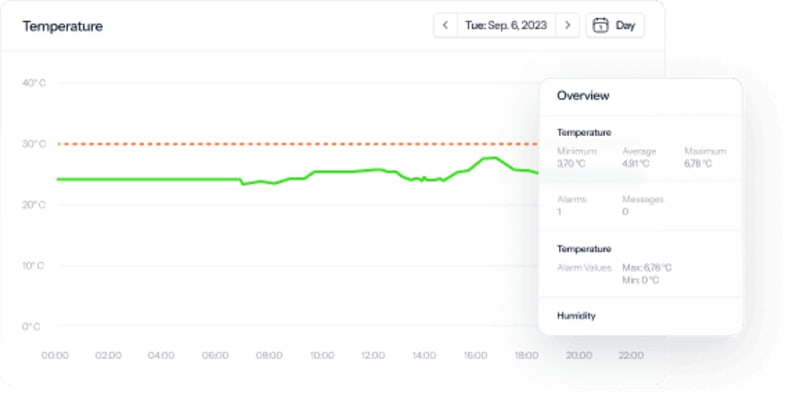
Data loggers
Wireless data loggers that automate temperature and humidity compliance for pharma, biotech, and healthcare logistics. Here is what to look for – and how Eupry's solution works.

What is a data logger?
A data logger is an electronic device that automatically measures and records environmental parameters – most commonly temperature, but also humidity, CO2, and differential pressure – over time. Data loggers range from simple USB devices that store readings locally to wireless systems that transmit data in real time to a cloud platform.
In regulated industries like pharma, biotech, and healthcare logistics, data loggers are used to document that products are stored and transported within required temperature ranges. The type of data logger you need depends on your compliance requirements, the number of monitoring points, and how you need to access and report on the data.

How do USB and wireless data loggers compare?
Manual/USB data loggers | Wireless data loggers | |
Data transfer | Manually retrieve and plug into a computer to download readings | Automatic transfer via Wi-Fi to a cloud platform |
Visibility | No visibility until data is exported | Real-time view of conditions 24/7 |
Alerts | None until data is manually reviewed | Instant SMS or email alerts on deviations |
Monitoring | Periodic – you only see data after export | Real-time – live view from any screen |
Audit reporting | Manual compilation from exported files | Automated reports generated in the platform |
Operational disruption | Logger must be physically removed for data export | No interruption, data flows continuously |
Calibration management | Manual management of recalibration scheduling | Some providers handle recalibration as part of the service |
Data access | Data spread across local files, USB exports, and software | All data, certificates, and reports in a single platform |
How do wireless temperature data loggers work?
Wireless data loggers continuously measure environmental conditions – temperature, humidity, CO2, pressure – and transmit the data via Wi-Fi to a server or cloud platform at regular intervals. The logger also stores measurements locally as a backup.
If a reading falls outside the specified range, the system can send an immediate alert by SMS or email, allowing you to act before the deviation becomes a compliance issue. This makes wireless data loggers the standard choice for regulated environments where real-time visibility and fast response times matter.

Types of data loggers
Data loggers are categorized by what they measure and how they connect. Here are the most common types in regulated industries — this is not an exhaustive list, but it covers the configurations most relevant to pharmaceutical, biotech, and logistics compliance.
Temperature data loggers
The standard in pharma, biotech, and logistics. Temperature data loggers record readings at set intervals to document that products stay within required ranges. Available as USB models that store data locally or as wireless temperature data loggers that transmit readings via Wi-Fi to a cloud platform in real time.
Temperature and humidity data loggers
Track both parameters simultaneously. Required in environments where humidity affects product stability — pharmaceutical warehouses, cleanrooms, and stability chambers. Eupry's humidity sensors cover 20–80% RH with a resolution of 0.01% RH.
Temperature and humidity data loggers from Eupry
Pressure data loggers
Record differential pressure between rooms or zones. Used in cleanrooms and controlled environments where pressure differentials prevent cross-contamination.
Thermocouple data loggers
Use thermocouple probes for extreme temperature ranges — from ultra-low freezers down to -200°C (-328°F) to high-temperature processes up to +200°C (392°F). Common in thermal validation and mapping.
USB data loggers
Store data locally and require a physical connection to a computer for data export. Lower upfront cost, but manual exports create documentation gaps and operational disruption in regulated environments.
Also read: USB data loggers vs. wireless: a detailed comparison
Bluetooth data loggers
Transfer data wirelessly over short distances to a phone or tablet. Useful for transport and shipment logging where Wi-Fi is not available.
What to look for when choosing a data logger
Not all data loggers are built for highly regulated environments like pharma. If you need to demonstrate compliance, here are the specifications that matter most.
-
Accuracy and calibration: Your data logger's accuracy is only as reliable as its calibration. Look for loggers calibrated to ISO 17025 standards with a documented calibration uncertainty. Equally important: how recalibration is handled. Some providers include it in the service model; others leave it to you, which means sourcing a calibration lab, shipping equipment, and managing downtime.
-
Wireless connectivity: In GxP environments, manual data exports create risk – both from gaps in documentation and from the operational disruption of removing loggers from their positions. Wi-Fi data loggers that transmit automatically to a cloud platform eliminate both problems.
-
Software and platform: The logger is only half the solution. The platform it connects to determines how you access data, generate reports, manage deviations, and prepare for audits. Look for user management, deviation workflows, automatic audit report generation, and compliance with 21 CFR Part 11 or EU Annex 11.
-
Alarm functionality: Real-time alerts by SMS or email when readings fall outside your specified range. Without automated alarms, deviations can go unnoticed for hours or days – turning a minor excursion into a compliance event.
-
Sensor range and flexibility: Match the logger's measurement range to your application. Standard temperature sensors typically cover -50°C to +50°C (-58°F to 122°F), but ultra-low freezers or high-temperature processes may require extended-range probes down to -200°C (-328°F) or up to +200°C (392°F).
-
Cost structure: Some data loggers are sold as one-time purchases with no included service. Others come as a subscription that includes software, calibration, and sensor replacements. The upfront price of a standalone logger can look lower, but the total cost over 3–5 years – including annual recalibrations, software licenses, and replacement equipment – is often higher than a service model.
Also read: How to choose the right temperature mapping equipment

How does Eupry's Wi-Fi-based data logger work?
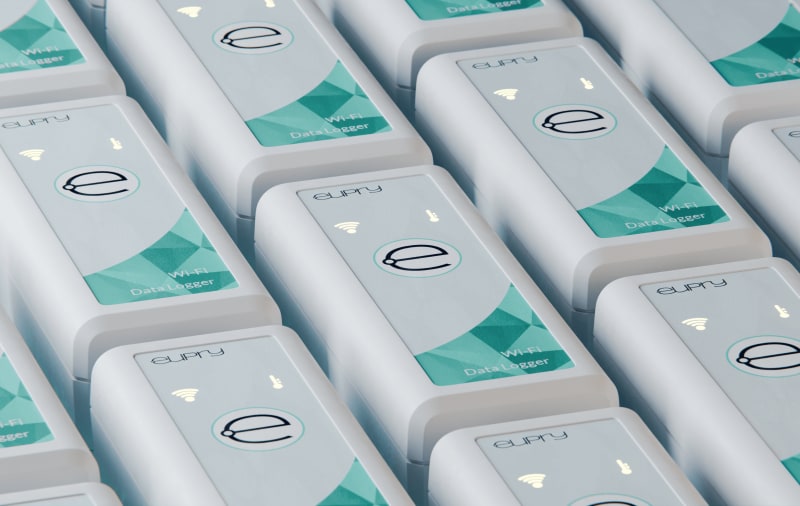
Eupry's Wi-Fi data loggers are built for pharma, biotech, and healthcare logistics.
- Automated data transfer to the monitoring platform
- Instant deviation alerts on e-mail/SMS
- Complete audit reporting in just 3 clicks
How it works
The wireless data loggers automatically record and transmit data to the included cloud platform, where you can monitor conditions in real time, receive deviation alerts, and generate audit-ready reports in 3 clicks.
Calibration is handled through Eupry's patented sensor-tip technology that lets you reduce the time you spend on calibration by up to 95%.

Who uses data loggers?
Data loggers are used across any industry where environmental conditions affect product quality, safety, or compliance.
Some of the most common applications are:
-
Pharma and biotech: Tracking temperature in cold storage, warehouses, stability chambers, and during transport. Required for GMP, GDP, and GxP compliance. Eupry for pharma | Eupry for biotech
-
Healthcare logistics: Documenting temperature conditions throughout the pharmaceutical supply chain — from warehouse storage to last-mile delivery. GDP compliance requires continuous, traceable records. Eupry for logistics
-
Laboratories: Tracking conditions in incubators, freezers, and environmental chambers to protect research samples and comply with GLP requirements. Eupry for laboratories
-
Hospitals: Pharmacy refrigerators, blood bank storage, vaccine fridges, and lab units across every department. Eupry for hospitals.
-
Pharmacies: Tracking vaccine storage temperatures, medication refrigerators, and controlled room temperature storage. Eupry for pharmacies
-
Food production and cold chain: HACCP compliance, cold storage documentation, and transport temperature records.
Compatible products & add-ons
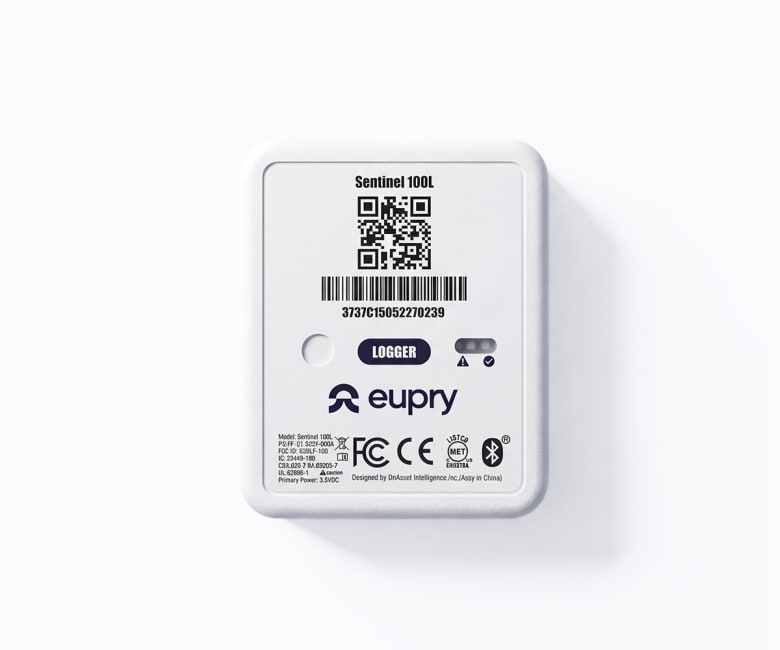
FAA-approved compact data logger for aircraft temperature mapping with automatic data offload
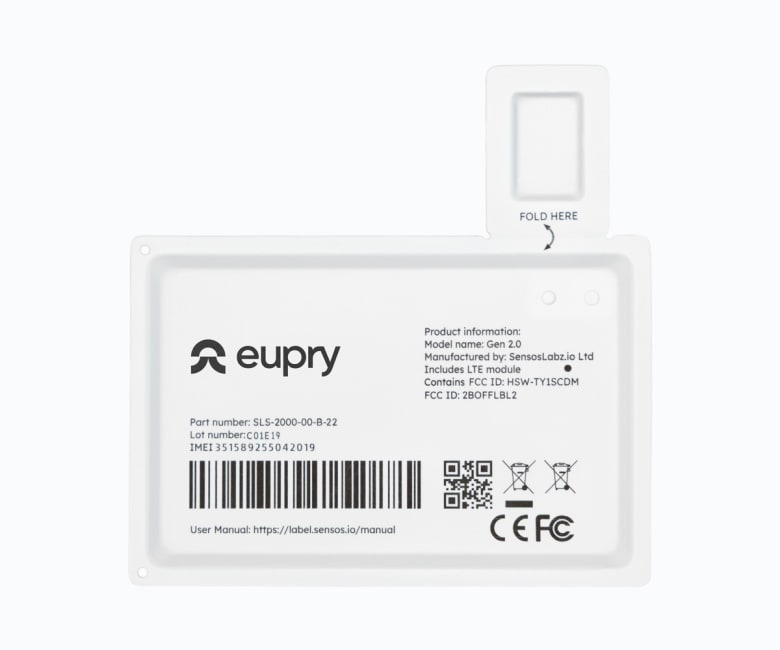
GDP-compliant smart label with cellular tracking for temperature, humidity, and location monitoring.
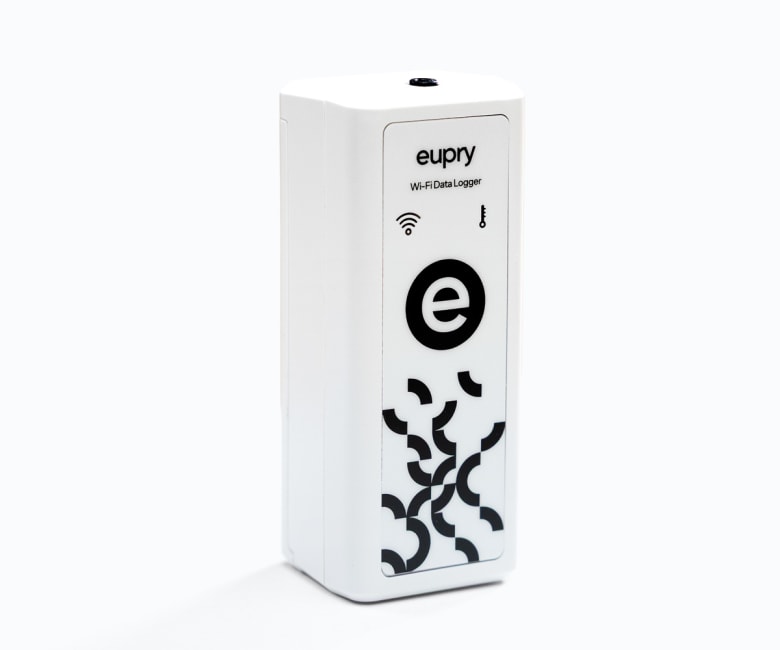
Wireless monitoring with 2-year battery life and secure, encrypted data transfer
Different types of wireless data logger sensors
Our patented Aliio technology provides a full range of sensors to attach to wireless data loggers and facilitates the most cost-effective method for calibration.
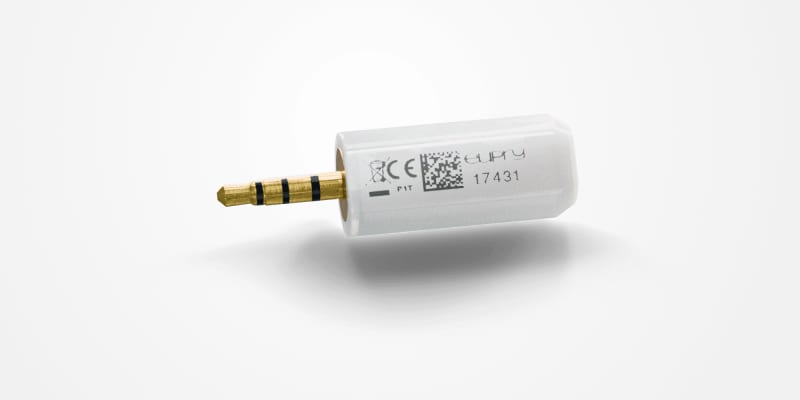
ALIIO Temperature Sensor
- Operating range: -50°C to +50°C (-58°F to 122°F)
- Temperature resolution: 0.01°C (0.018°F)
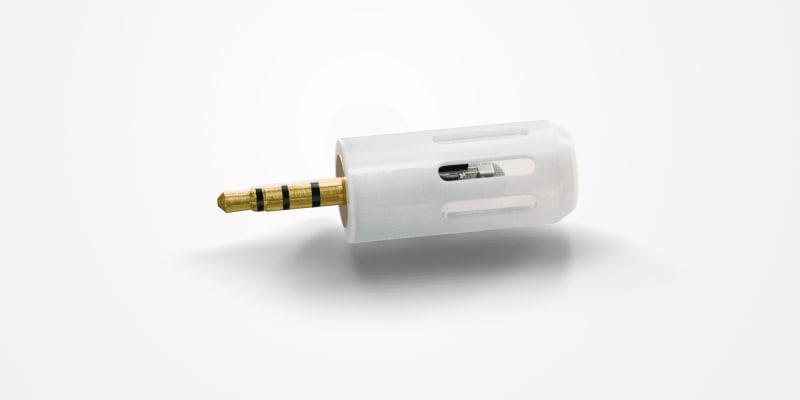
ALIIO Humidity Sensor
- Operating range: 2°C to 50°C (35.6 °F to 122 °F)
- Resolution: 0.01°C (0.018°F) 0.01 %RH
- Humidity range: 20-80% RH (Non-condensing)
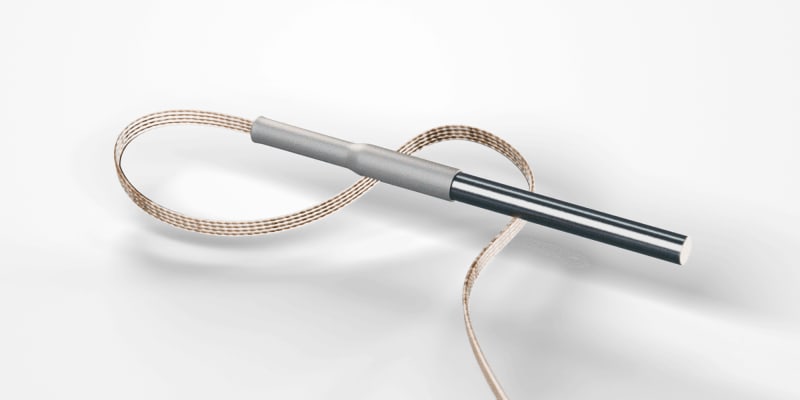
ALIIO Temperature Probe
- Operating range: -90 °C to +50 °C (-130 °F to 122 °F)
- Temperature resolution: 0.08°C (0.14°F)
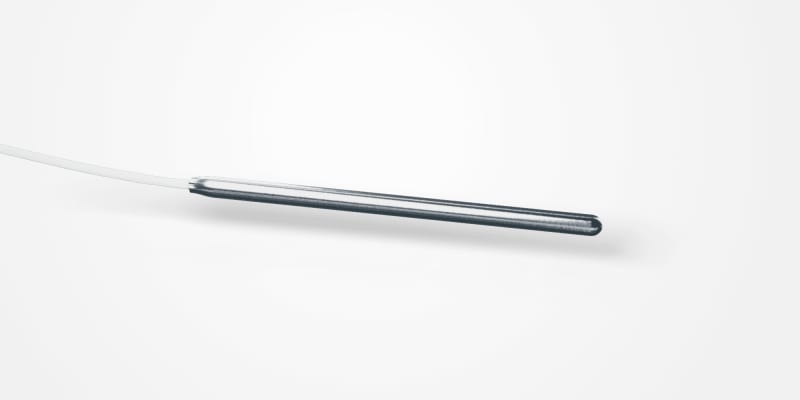
External Temperature Teflon Probe
Operating range: -200 °C to +200 °C (-320.8 °F to 392 °F) Temperature resolution: 0.03 °C (0.054 °F)
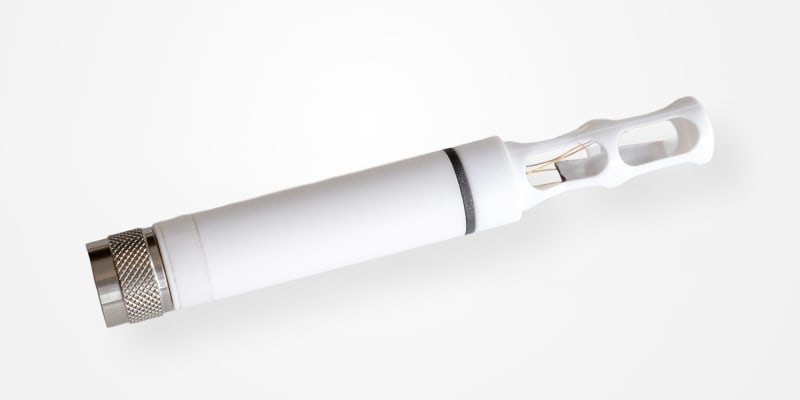
HC2A - High Precision Humidity Probe
- Accuracy @23 °C: ±0.5 %rh
- Application range: -50 to 100 °C
- Sensor element: HYGRIMER HT-1
- Long-term stability: <1 %rh per year with clean air

Reduce risks and manual work with wireless data loggers from Eupry
Find all the technical specifications, dive into how the solutions work, and find an overview of all equipment in the free solution catalog.
Data logger calibration
Calibration ensures your data logger measures accurately by comparing its readings against an accredited reference standard. In most regulated industries, annual recalibration is required, and the calibration certificate is a key audit document.
How calibration works, what accredited vs. non-accredited means, and how to manage recalibration without operational disruption, all of this is covered in the full calibration guide.
Also read: Your guide to temperature and humidity calibration in GxP
FAQ about wireless temperature data logger
We have gathered the most frequently asked questions and answers below. Click on a headline to see the answer.
3 ways to learn more
How to choose the right temperature mapping equipment
6 ways to spend (way) less time on manual temperature compliance